Your Ultimate Guide to Homes for Sale in Nashville, TN: 2026 Market Insights
Your Ultimate Guide to Homes for Sale in Nashville, TN: 2026 Market Insights
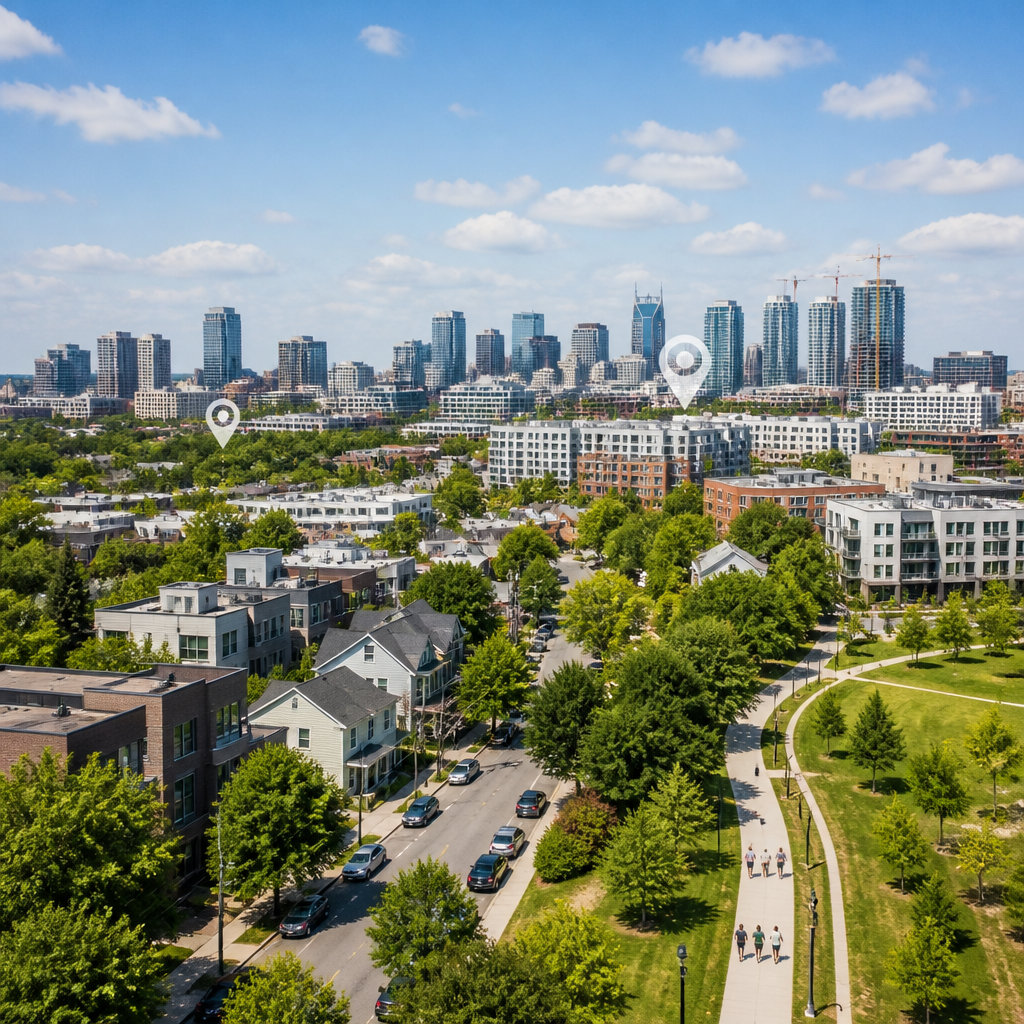
Nashville’s housing market continues to attract buyers from across the country, drawn by strong job growth and cultural depth. As of late 2024, Nashville’s population has surpassed 700,000 residents, a figure that signals sustained long-term demand for housing across Davidson County. From historic cottages in East Nashville to new luxury condos in The Gulch, options span a wide range of budgets and lifestyles. Understanding market data, neighborhood dynamics, and competitive strategies in advance builds the foundation for successful decisions in 2026.
How is the 2026 market shaping up for homes for sale in Nashville, TN?
Market conditions entering 2026 reflect a city still in growth mode but stabilizing after rapid appreciation. According to Redfin, median sale prices in Nashville hovered in the range of $430,000 to $470,000 through late 2024, with year-over-year changes moderating to the mid-single digits. The same data shows typical days on market fluctuating between 30 and 40 days, indicating a market that rewards decisive, well-prepared buyers while no longer matching the extreme pace seen earlier in the decade.
Inventory has improved yet remains constrained in key corridors such as Green Hills, Sylvan Park, and 12 South. Based on trends highlighted by Realtor.com, the number of active listings in Nashville often ranges from 1,500 to 2,000 properties, with fewer than 400 available at any given time in the most central ZIP codes. This imbalance between demand and supply sustains competitive conditions, especially for move-in-ready homes near major employment centers.
Population growth continues to influence demand patterns. According to U.S. Census Bureau estimates through 2023, Nashville’s population has expanded by roughly 10% over the decade, placing persistent pressure on buildable land inside the I-440 loop. Areas like Germantown and The Nations have seen robust infill development, with townhomes and small-lot single-family homes replacing underutilized industrial parcels and older rentals.
Urban lifestyle amenities add another layer of resilience to the market. The presence of major venues such as Nissan Stadium, Bridgestone Arena, and the Ryman Auditorium anchors entertainment districts along Broadway and in SoBro. Homes within 3 to 5 miles of these destinations, including properties near West End Avenue and Music Row, often command premiums thanks to easy access to dining, nightlife, and employment in downtown Nashville and Midtown.
Which neighborhoods stand out for homes for sale in Nashville, TN?
Each Nashville neighborhood offers a distinct mix of housing styles, price points, and community features. East Nashville, encompassing popular pockets around Five Points, Lockeland Springs, and Fatherland Street, blends historic bungalows with renovated craftsman homes. According to Zillow, many East Nashville ZIP codes show typical home values in the approximate band of $450,000 to $550,000 as of late 2024, reflecting steady demand for character-rich properties near downtown.
Green Hills and Belle Meade attract buyers seeking larger lots and established streetscapes near high-end retail and schools. The Mall at Green Hills, Hillwood Country Club, and the tree-lined sections of Harding Pike and Hillsboro Pike give this area a more traditional suburban feel despite its proximity to downtown. Data from Realtor.com indicates listing prices in prime Green Hills streets can easily reach between $900,000 and $1.5M, especially for newly built or extensively renovated homes.
On weekend afternoons in 12 South, sunlight glints off café windows along 12th Avenue South while music drifts from crowded patios at places like Frothy Monkey and Edley’s Bar-B-Que. The scent of espresso and smoked barbecue mixes with the sweetness of Jeni’s Splendid Ice Creams, and shoppers brush past mural-covered brick walls with warm concrete underfoot. This sensory mix gives homes along Kirkwood Avenue, Linden Avenue, and nearby streets an appeal that extends beyond square footage or bedroom counts.
For buyers prioritizing proximity to offices in downtown and Midtown, neighborhoods such as Germantown, The Gulch, and Capitol View offer walkable access to restaurants, retail, and job centers. According to walkability metrics from Walk Score, central Nashville neighborhoods often score in the 70 to 90 range for walking, compared with scores below 40 in more automobile-dependent suburbs. This difference can significantly influence daily routines, transportation budgets, and long-term satisfaction with a chosen home.
What price ranges define today’s homes for sale in Nashville, TN?
The price spectrum for homes across Nashville accommodates a wide array of budgets, though truly entry-level options close to downtown remain limited. According to Redfin, many starter-friendly condos and townhomes in neighborhoods like Donelson, Hermitage, and Antioch trade in the range of $260,000 to $350,000 as of late 2024. These communities along Lebanon Pike and Murfreesboro Pike balance relative affordability with reasonable access to jobs via I-40 and I-24.
Move-up buyers often focus on single-family homes in areas such as Sylvan Park, Charlotte Park, and Crieve Hall. Listings in these neighborhoods commonly fall between approximately $450,000 and $750,000, based on current ranges reported by Realtor.com. In many cases, renovated mid-century ranch homes or modest cottages on generous lots compete directly with newer infill builds that maximize interior square footage while keeping lot sizes compact.
At the upper end of the market, luxury homes in Belle Meade, Forest Hills, and along West End Avenue can exceed $2M with relative regularity. According to aggregated data from Zillow, properties in these enclaves frequently close in a band from roughly $1.5M to $3M, especially where expansive lots, pool-ready backyards, and proximity to Percy Warner Park intersect. Estate-style homes in these locations often combine privacy with quick access to downtown cultural and employment hubs.
Financing realities shape how buyers approach these ranges. Conventional loans often assume down payments around 20%, but FHA financing permits minimum down payments near 3.5%, as outlined by the Federal Housing Administration and summarized for consumers by Consumer Financial Protection Bureau. In a market where every $10,000 change in price can significantly alter monthly payments, understanding how down payment options adjust purchasing power is essential.
How do schools, commutes, and amenities influence homes for sale in Nashville, TN?
School quality remains one of the most powerful drivers of demand patterns across Nashville. According to ratings compiled by GreatSchools, several public options, including Hume-Fogg Academic Magnet High School and Martin Luther King Jr. Magnet High School, earn scores of 9 or 10 out of 10. Homes within reasonable commuting distance of these campuses, especially properties along West End Avenue, Charlotte Avenue, and in Germantown, often experience stronger competition and more resilient resale prospects.
Late in the afternoon at Centennial Park, the sun slides behind the Parthenon replica while the air fills with the sound of buskers near West End Avenue. The scent of food trucks drifts across the lawn toward families packing up picnic blankets, and a cool breeze moves through the trees bordering Lake Watauga. Condos and townhomes along 31st Avenue North, as well as nearby streets in Midtown, benefit from the palpable energy that settles over this green space most evenings.
Commute patterns also influence preference for specific neighborhoods. For workers based in the downtown core near the Tennessee State Capitol or Metro Courthouse, living in Germantown, Salemtown, or SoBro can reduce daily travel to less than 10 minutes by car or a short walk. Residents who work in outlying areas, such as the Nashville International Airport corridor or corporate offices in Cool Springs, often favor suburban pockets around Antioch, Brentwood, and Nolensville to keep drive times in the 20- to 35-minute range.
Amenities round out the quality-of-life equation. Access to major parks such as Percy Warner Park, Edwin Warner Park, Shelby Park, and Riverfront Park shapes recreational opportunities and long-term livability. Retail centers including Opry Mills, The Mall at Green Hills, and Fifth + Broadway concentrate shopping and dining within short drives of many neighborhoods. Combined with higher education anchors like Vanderbilt University, Belmont University, and Tennessee State University, these amenities contribute substantial stability to the value of homes across many Nashville ZIP codes.
What strategies help buyers compete for homes for sale in Nashville, TN?
Competitive dynamics in Nashville favor buyers who assemble financing and search strategies before a preferred listing appears. According to guidance derived from market trends on Redfin, a significant share of homes in popular neighborhoods still receive multiple offers, with a portion selling above list price. In price brackets below roughly $500,000, especially in East Nashville and Donelson, well-priced listings can attract several offers within the first 48 to 72 hours on market.
Pre-approval letters tailored to specific price ranges help buyers act quickly and demonstrate capacity to close. Lenders familiar with down payment assistance programs in Tennessee, including forgivable second-mortgage options, can expand affordability for qualified applicants. Data from Consumer Financial Protection Bureau indicates that fixed-rate mortgages have hovered in the vicinity of 6% to 7% through much of 2024, making interest-rate shopping and discount points analysis critical components of offer preparation.
Offer structure matters alongside price. Flexible closing dates, limited yet reasonable inspection timelines, and clean contingencies can strengthen bids without simply raising numbers. In neighborhoods around Hillsboro Village, Sylvan Park, and the 12 South corridor, where renovated homes near Belmont University and Vanderbilt University remain in high demand, finely tuned terms often differentiate winning offers when prices are clustered within a narrow $10,000 to $20,000 band.
Digital tools support vigilant search efforts. Saved searches on major portals, neighborhood-focused newsletters, and listing alerts from brokerages specializing in Nashville create early awareness of new inventory. In parts of Germantown, The Nations, and Charlotte Park, where modern townhomes and smaller single-family homes appear sporadically, being prepared to tour a promising listing within the first 24 hours often provides an edge over less organized competitors.
The population figure above 700,000 cited at the start of this guide reflects a structural demand base that underpins current and future activity in the Nashville housing market. That same population growth reinforces why inventory thresholds and days-on-market bands reported by national portals matter so directly for local pricing. The Greater Nashville Realtors monthly market reports provide one of the clearest real-time snapshots of listings, closed sales, and price trends across Davidson County and surrounding areas. Buyers who register listing alerts, monitor those reports closely, and schedule in-person tours within 48 hours of a promising property hitting the market before the height of the spring 2026 selling season will materially increase the likelihood of securing a preferred home and reduce the risk of being consistently outbid as competition intensifies.
Recent Posts